Finding the right Newcastle commercial vehicle finance is crucial if you’re a tradie, small business owner, or growing operator in the Hunter Region. From work utes and vans heading out of Hamilton and Charlestown to fleets moving through Lake Macquarie, Maitland, and Beresfield, having the right equipment can be the difference between simply quoting jobs and actually delivering them.
Fininity Asset Finance is a bespoke asset finance broker headquartered on the Central Coast NSW and operating nationwide across Australia. That means we help Newcastle and Hunter businesses compare options across a broad lender panel, then structure a solution that fits how you work, how you invoice, and how your cash flow behaves.
Why Newcastle and the Hunter are built for asset finance conversations
The region’s economy is diverse: construction and trade services across Newcastle and Port Stephens, logistics linked to the Port of Newcastle, manufacturing and warehousing around the Hunter corridor, and agriculture, wine, and mining-adjacent services further out through Singleton, Muswellbrook and Cessnock. Many of these industries rely on vehicles, trailers, and machinery that need to be reliable, compliant, and ready to go.
Because assets are central to day-to-day operations, commercial asset finance can be a practical way to spread the cost over time while keeping working capital available for wages, stock, fuel, and the “surprise expenses” that show up on every job.
Commercial vehicle finance in plain English (utes, vans, trucks, and fleets)
“Commercial vehicle finance” is a broad term that can include several different loan and lease structures. The best fit usually depends on who’s buying the vehicle (a company, a sole trader, or an individual), how it’s used (business, personal, or a mix), and what you want the ownership outcome to be at the end.
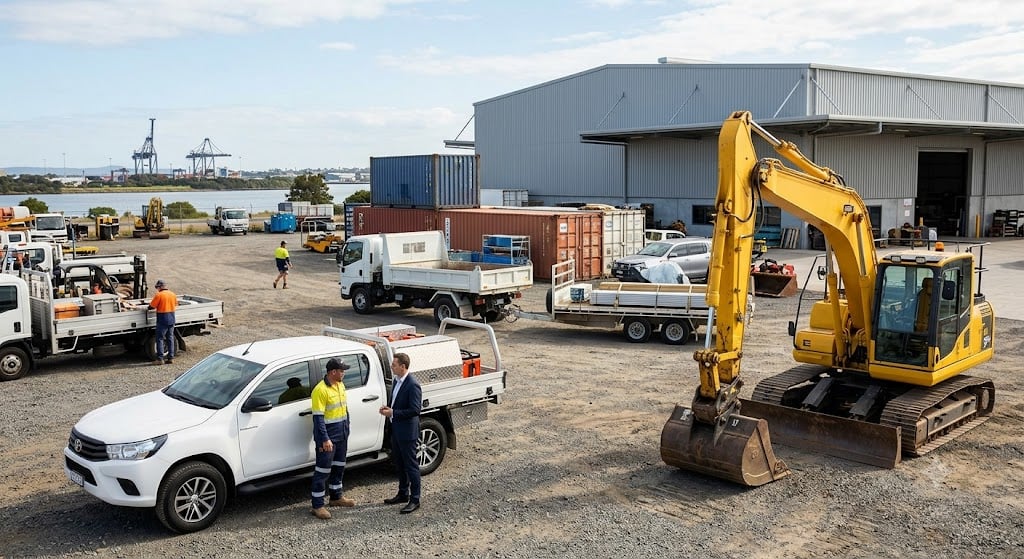
In Newcastle and the Hunter, we commonly see finance requests for work utes, vans, light trucks, tippers, traybacks, and specialist vehicles used by electricians, plumbers, builders, landscapers, civil contractors, and mobile service businesses. We also help consumers who need vehicle finance for personal use, including those balancing family budgets while still wanting a dependable car for commuting between Newcastle, the Central Coast and Sydney.
Chattel mortgage: a popular option for business vehicle purchases
A chattel mortgage is one of the most common structures for business-purpose vehicle finance in Australia. In simple terms, the business buys and owns the vehicle, and the lender takes security over that asset while it’s being paid off.
Chattel mortgages can suit many ABN holders and companies because they’re designed for business use and are often straightforward to understand: you’re financing a specific vehicle, you’re the owner, and you’re repaying it over an agreed term. The specifics (including any tax and GST considerations) depend on your situation, so it’s wise to speak with your accountant or adviser about how a purchase and finance structure should be treated.
At Fininity, our job isn’t to push one product. It’s to help you compare chattel mortgages against other options so the structure matches your cash flow and the way the asset will be used.
Other structures worth comparing (not one-size-fits-all)
Depending on your goals, there may be alternatives to a chattel mortgage. For example, some businesses prefer a lease-style structure, while some consumers consider options that fit personal budgeting and employment arrangements.
- Finance lease / equipment lease-style options: Often considered when you want predictable repayments and a clear pathway at the end of term, particularly for business use.
- Operating-style leasing: In some scenarios, businesses may explore solutions designed around usage and flexibility (availability and suitability depends on the lender and asset type).
- Novated lease (consumer/employed pathway): If you’re an employee in Newcastle or the Hunter and packaging a car through salary, a novated lease may be something to discuss with your employer and accountant/adviser.
- Business loan / other commercial lending: Sometimes a broader facility is considered, but it needs to line up with the asset, purpose, and lender policy.
The key is comparing the trade-offs: ownership outcome, cash flow impact, documentation required, and how the asset’s use (business vs personal) is viewed by the lender.
Equipment finance and machinery lending for Hunter operators
Vehicles are only part of the picture. Many Newcastle and Hunter businesses also rely on financed equipment to deliver jobs and scale up responsibly. Equipment finance and machinery lending can cover a wide range of assets, from tools of trade to high-value plant.
Examples we regularly see include:
- Earthmoving and civil: excavators, skid steers, loaders, rollers, attachments, and trailers
- Trades and services: fit-out equipment, compressors, generators, mobile workshops, and specialised tools
- Warehousing and logistics: forklifts, pallet equipment, racking solutions (where fundable), and handling machinery
- Hospitality and retail: kitchen equipment, refrigeration, point-of-sale hardware, and venue upgrades
Whether you’re quoting projects in Newcastle CBD, servicing customers around Lake Macquarie, or expanding operations out toward the vineyards and industrial areas of the Hunter Valley, the “right” finance structure is usually the one that fits your job cycle and leaves room for the rest of your business to breathe.
What lenders typically look at (and how a broker makes it easier)
Even when you’ve found the perfect vehicle or equipment, approvals are still based on lender criteria. That’s where a broker can be valuable: we help present your application clearly, choose lenders that match your scenario, and avoid unnecessary back-and-forth.
While requirements vary, lenders commonly assess:
- Identity and entity details: ABN/ACN, time trading, directors/owners
- Asset details: quote or invoice, supplier info, year/make/model, usage, and condition (new vs used)
- Financial position: bank statements, BAS/financials, liabilities, and overall affordability
- Conduct and story: how the asset supports revenue (new contract, replacement, expansion, efficiency)
- Credit profile: credit history and any recent changes that need context
Fininity’s bespoke approach means we don’t just “submit and hope.” We help you prepare the right documents, explain the purpose in plain language, and structure the deal so it makes sense for both you and the lender.
Cash flow realities in Newcastle and the Hunter (and structuring around them)
Many local businesses deal with uneven cash flow: progress payments, project milestones, seasonal swings, and the gap between doing the work and getting paid. Add in fuel, labour, and supplier costs, and it’s easy to see why choosing the right repayment profile matters.
When we build a tailored solution, we’ll consider practical factors like your invoicing cycle, whether you need to preserve cash for upcoming jobs, and how the asset will be used day-to-day. The goal is not to overcomplicate things; it’s to align the finance structure with real operating conditions across Newcastle, Maitland, and the broader Hunter Region.
Why Fininity isn’t “just another bank option”
Walking into a single bank can be fine in some situations, but it usually means you’re limited to that institution’s policies, product set, and appetite on the day. Fininity is different because we’re a specialist broker: we compare options across lenders and focus on building a finance solution around you.
Clients come to us for a mix of reasons:
- Choice: access to multiple lenders and product types rather than a single menu
- Strategy: matching the structure to your goals (ownership, flexibility, cash flow)
- Clarity: plain-English guidance for busy tradies, operators, and families
- Support: help coordinating paperwork with suppliers, accountants, and stakeholders
And because we operate nationwide, we can help whether you’re in Newcastle today, expanding into Sydney or Melbourne tomorrow, or running jobs across Brisbane, Perth, Adelaide, Canberra, Darwin or Hobart over time.
A quick Newcastle & Hunter checklist before you apply
If you want a smoother experience, it helps to get a few basics together before you start comparing options.
- Confirm the asset: quote or invoice, supplier details, and whether it’s new or used
- Know the buyer: individual, sole trader, company, or trust (and who the directors are)
- Summarise the purpose: replacement, expansion, new contract, efficiency upgrade
- Prepare financials: bank statements and relevant business information (as applicable)
- Talk to your accountant: especially if you’re deciding between loan vs lease structures
With those basics in place, we can usually move quickly into comparing suitable pathways and explaining the trade-offs clearly, without drowning you in finance jargon.
Talk to Fininity Asset Finance for a personalised consultation
If you’re looking at commercial vehicle finance in Newcastle or the Hunter Region, weighing up a chattel mortgage, or exploring equipment finance and machinery lending, Fininity Asset Finance can help you map out a solution that fits your goals and your cash flow. Contact Fininity today for a personalised consultation and we’ll help you compare options and structure asset finance that makes sense for your situation.