
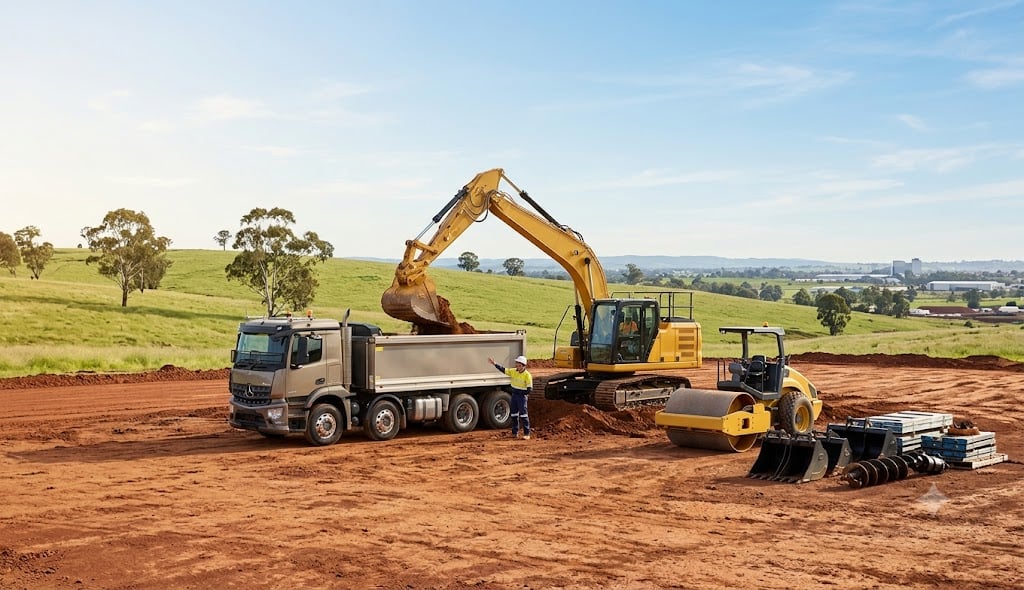
Winning work on the Darling Downs is one thing. Funding the gear to deliver it on time is another. If you are a local contractor, earthmover, landscaper, quarry operator or growing trade business, civil construction equipment finance Toowoomba searches usually start when a new job lands, a machine goes down, or you spot a clean used unit that will not hang around. The challenge is getting finance that matches how your business actually gets paid, without being boxed in by generic bank rules.
Toowoomba is a powerhouse for civil and industrial activity, with work flowing between the CBD, Harristown, Wilsonton, Highfields and out toward Oakey and the Wellcamp precinct. Add the Toowoomba Bypass, logistics on the Warrego Highway, local quarries, agriculture-support industries and steady housing growth, and it is no surprise plant utilisation can swing quickly. The right finance structure helps you take on bigger scopes, reduce downtime, and protect cash flow for wages, fuel and subcontractors.
What assets are Toowoomba contractors typically financing?
Civil and construction businesses on the Downs commonly finance both core machines and the attachments that make them profitable. Lenders usually consider the age, condition and resale market for the asset, as well as whether it is new, dealer-used or private sale.
- Excavators, mini excavators and rubber track machines
- Skid steers, compact track loaders and backhoes
- Loaders, graders, dozers and rollers
- Tippers, water carts and site support trucks
- Trailers, tool carriers and trade fit-outs
- Attachments such as augers, breakers, trenchers, mulchers and GPS machine control
A common mistake is treating attachments as an afterthought. Bundling attachments into the same facility can reduce upfront outlay and keep your working capital intact, provided the overall deal still stacks up under lender assessment.
The finance structures that usually suit civil equipment
There is no single best product for every contractor. What matters is aligning the structure to your tax position, your cash-flow pattern, and how long you intend to keep the machine. This is where broker-led advice can outperform a one-size product.
- Chattel mortgage-style funding (business equipment loan): Often used when you want ownership from day one. Payments can sometimes be shaped with a residual to manage monthly commitments (subject to lender policy).
- Finance lease: Common where you want flexibility and may regularly rotate equipment. End-of-term options vary and should be reviewed with your accountant.
- Hire purchase (where available): Still used in some scenarios for business buyers; structure and suitability depend on lender and asset type.
- Operating-style leasing: In some cases, businesses prefer a usage-focused arrangement rather than long-term ownership, especially for fleet-like equipment.
In the first half of the decision, the conversation is not just about the asset price. It is about how payments hit your bank account against progress claims, retentions, and seasonal work. This is exactly why many Toowoomba operators work with Fininity for tailored asset finance solutions that can be shaped around real trading conditions rather than a generic template.
Why the big-bank process often breaks down for plant and machinery
Many contractors have had the experience: you have steady work, a decent margin, and a practical reason to upgrade, yet the application gets stuck because the bank system wants neat PAYG-style income, or it does not like the mix of subcontracting, project spikes, and asset-heavy balance sheets. That is the classic “computer says no” moment.
Specialist equipment lenders and non-bank funders often take a more commercial view of your situation, but each has its own credit appetite, documentation preferences, maximum asset ages, and valuation rules. A broker-led approach matters because we can match your profile to an appropriate lender on our national panel, then structure the facility around the asset, the security position and your cash-flow cycle. It is not about chasing the cheapest headline promise (and we never guarantee approvals); it is about finding a workable pathway that helps you keep machines earning.
What lenders usually assess (and how to look stronger)
While every lender is different, most will assess a similar set of fundamentals. If you prepare these early, you can reduce back-and-forth and avoid settlement delays when a dealer or private seller is pushing for a quick pickup.
- Time trading and ABN history: Newer ABNs may still be fundable, but lender choice becomes more important.
- Financials or BAS: Some lenders prefer accountant-prepared financials; others may accept BAS and bank statements depending on scenario.
- Bank conduct: Overdraws, dishonours and inconsistent cash flow can raise questions, even if revenue is strong.
- Asset details: Make, model, year, hours, serial/VIN, photos, and whether it is dealer or private sale.
- Security and ownership structure: Company, trust, or sole trader setups can change documentation requirements.
- Credit history: Old defaults, paid listings, or thin file profiles do not always mean no, but they must be addressed transparently.
To improve your position, keep your statements tidy where possible, separate business and personal expenses, maintain up-to-date registrations and insurances, and be ready to explain any one-off events (slow-paying clients, storm downtime, unexpected repairs). A short, clear story often helps an assessor understand the numbers.
Low-doc and alt-doc options: when they help (and when they don’t)
In construction, cash flow can be lumpy. That is why low-doc or alt-doc pathways can be useful for certain Toowoomba businesses, especially those with strong turnover but less-than-perfect year-end profitability due to reinvestment, or those early in a growth phase. These options may rely more on BAS, bank statements, and an asset-driven view of risk.
However, low-doc does not mean no-doc, and it does not remove responsible lending checks. You may still need evidence of trading activity, confirmation of GST registration, and a sensible explanation of your equipment need. Depending on the lender and the asset, a stronger deposit or tighter policy may apply. The goal is to choose a documentation path that fits your situation without overcomplicating the approval process.
Structuring tips that protect cash flow on the Downs
Toowoomba contractors often face a mix of fixed-price work, hourly wet hire, and project-based claims with retentions. A standard monthly repayment can be fine, but many businesses benefit from smarter shaping. Subject to lender policy and credit assessment, these are common levers we explore:
- Using a residual/balloon to reduce monthly commitment and keep cash available for fuel, tyres and wages
- Aligning repayment dates to your invoicing cycle rather than the calendar
- Bundling attachments or multiple purchases into one facility to reduce separate fees and paperwork
- Choosing a term that reflects expected utilisation and the realistic replacement cycle
- Planning for deposit strategy: preserving working capital versus strengthening approval odds
These decisions are not just finance jargon. They directly affect whether you can take on an extra crew, handle a slow-paying principal, or jump on a time-sensitive equipment deal in Toowoomba, Warwick, Gatton or across the Lockyer Valley.
A practical pre-approval checklist (so you can move fast)
If you want to be ready when the right machine appears, treat finance prep like site prep. A fast approval is usually the result of good information, not luck.
- Confirm the exact asset you want (or a short list) and get a formal quote or invoice
- Have your ABN, GST status and entity documents ready (company/trust details if relevant)
- Gather the last 6–12 months of bank statements and/or recent BAS
- List existing liabilities (including other equipment facilities) and current limits
- Provide your driver licence and any required ID promptly
- Explain the purpose: replacement due to downtime risk, added capacity for new contracts, or efficiency upgrade
When everything is presented cleanly, you avoid settlement surprises such as last-minute valuation issues, missing serial numbers, or delays with PPSR registration. That matters when you are trying to get a machine on site for a job start date near Wellcamp, the industrial estates, or a roadworks package heading west.
Fininity’s broker-led difference for Toowoomba equipment buyers
Fininity Asset Finance is not tied to one lender or one credit policy. We compare options across a national lending panel and focus on structure, not just approval. That means we can look for a lender whose appetite matches your asset type (new versus used), your trading profile (seasonal or project-based), and your documentation position (full-doc versus alt-doc), while keeping the process clear and compliant.
If you are buying your next excavator, skid steer, roller or full plant package in the Toowoomba region, we will help you choose a facility that supports growth without starving the business of cash flow. For a tailored, local-to-your-workflow conversation, contact Fininity Asset Finance today.